
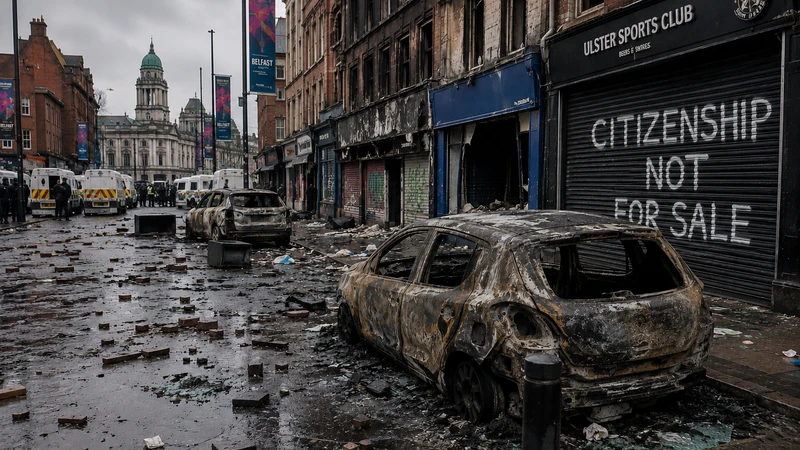
The shocking knife attack that left a Belfast man seriously injured has become more than a criminal investigation—it has become a symbol of growing public frustration with immigration policies that many believe are failing ordinary citizens.
Authorities have charged a Sudanese migrant with attempted murder following a violent assault that left the victim hospitalized with severe injuries. While police continue their investigation, the attack has already sparked widespread outrage and days of unrest throughout Belfast.
For many residents, the incident represents a larger problem. Across the United Kingdom and much of Europe, governments have expanded immigration programs while often dismissing concerns about public safety, cultural integration, and the strain placed on local communities. Critics argue that citizens are repeatedly told to ignore these concerns until tragedy strikes.
In Belfast, that frustration boiled over. Demonstrations quickly formed as residents demanded answers about how individuals with violent tendencies are allowed to enter or remain in the country. Protesters accused political leaders of prioritizing ideological commitments over the safety and security of their own people.
The resulting unrest led to property damage, burned vehicles, and a significant police response. While officials condemned the violence, many citizens argue that government leaders should also confront the policies that contributed to the public's growing anger and distrust.
Supporters of stricter immigration enforcement say the issue extends beyond a single incident. They contend that a nation that cannot effectively control its borders eventually loses control over public safety, social cohesion, and confidence in government institutions. They argue that secure borders, thorough vetting, and swift removal of violent offenders are not extreme positions but basic responsibilities of a functioning government.
As Belfast struggles to recover, the debate is no longer confined to political circles. It is unfolding in neighborhoods, workplaces, and communities where residents are asking whether their leaders are willing to put the safety of citizens first.
For many, the events in Belfast serve as a stark reminder that immigration policy is not an abstract political issue—it carries real-world consequences for the people who must live with the results.
- Article Source:
FOX News

- Photo:
