
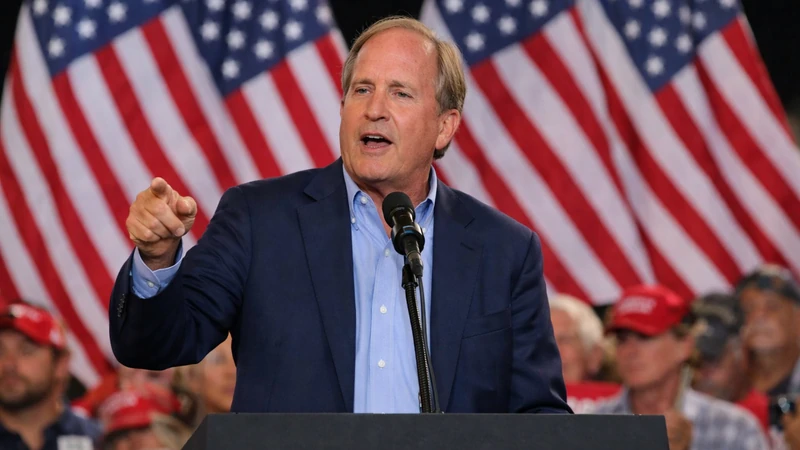
The Republican primary for the Texas U.S. Senate seat has officially moved to a runoff between incumbent Senator John Cornyn and Texas Attorney General Ken Paxton after neither candidate secured a majority of the vote. Cornyn finished with roughly 43 percent while Paxton came close behind with about 41 percent, with a third candidate drawing enough support to prevent either from crossing the critical 50 percent threshold. ()
But beneath the headlines lies the real story: this was a referendum on the incumbent—and the results are a warning sign for Cornyn.
In Republican primaries, incumbents traditionally dominate. They benefit from name recognition, donor networks, and years of political relationships. When an incumbent cannot break 50 percent, it usually means a majority of voters are actively looking for someone else. At that point, the race stops being about challengers gaining ground and starts becoming about voters deciding the incumbent’s time is up.
That’s exactly the situation Cornyn now faces.
After more than two decades in Washington, Cornyn represents the old guard of the Republican Party—an era when establishment politics often took priority over the grassroots energy driving today’s America First movement. For many conservative voters, the question isn’t just who can win in November. It’s whether their senator truly reflects the priorities of Texas Republicans today.
Ken Paxton has built his campaign around that very argument. As Texas attorney general, Paxton has consistently positioned himself as a fighter against federal overreach, illegal immigration, and progressive legal agendas. That record has earned him strong support from grassroots conservatives who want a senator willing to challenge Washington rather than accommodate it.
The runoff now becomes a clear choice between two directions for the Republican Party in Texas.
On one side is Cornyn, a four-term senator backed by much of the national Republican establishment and well-funded political groups. On the other is Paxton, who has rallied a base of voters eager to push the party further toward the America First agenda championed by President Donald Trump.
The numbers from the primary show just how unsettled the race has become. Even with massive spending and establishment support behind him, Cornyn could not win a majority of Republican voters. Instead, most voters chose someone else.
And in politics, that kind of message is hard to ignore.
History shows that incumbents who fall short of 50 percent in their own primary are often what political strategists call “dead men walking.” Once a majority of voters signals it wants change, the momentum tends to shift toward the challenger.
Now the runoff will decide whether Texas Republicans want to stick with the Washington establishment—or send a clear message that the future of the party belongs to the America First movement.
- Article Source:
New York Times

- Photo:
