
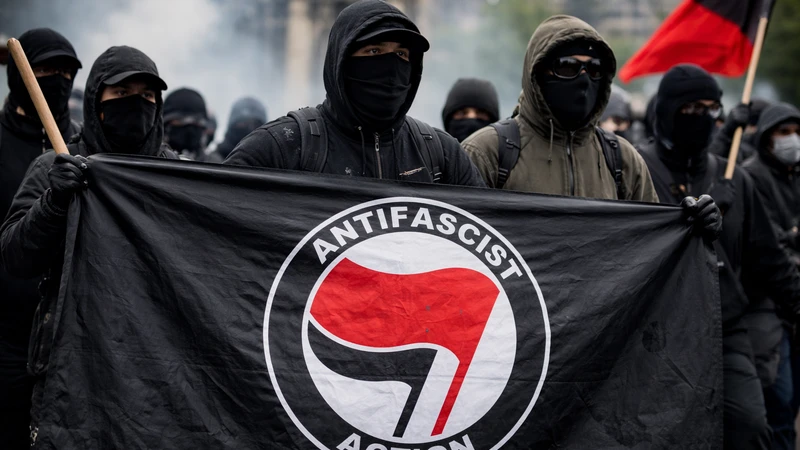
Another day, another example of America’s institutions drifting further from common sense.
A college in Portland is drawing criticism after advertising an event connected to Antifa that centers on “terrorism and radicalization.” For many Americans, the irony is hard to ignore. A movement widely associated with riots, property destruction, and political intimidation is now being given a platform in a classroom setting—under the banner of education.
The event, promoted through academic channels, appears to frame Antifa not as a subject of scrutiny, but as a participant in the conversation. That alone has raised eyebrows among those who believe colleges should be places of balanced inquiry—not ideological echo chambers.
Critics argue this reflects a broader pattern in higher education: a willingness to normalize or even promote far-left activism, while applying a much harsher lens to viewpoints on the right. Instead of encouraging open debate, institutions risk becoming one-sided environments where certain political ideologies are elevated and others are dismissed.
What makes this situation especially concerning is the subject matter itself. “Terrorism and radicalization” are serious topics that demand objectivity and intellectual honesty. Hosting an event tied to a group frequently linked to unrest raises legitimate questions about whether those standards are being upheld.
Supporters of the event may argue it’s about education or understanding different perspectives. But many see it differently—viewing it as yet another example of selective outrage and political favoritism in academia.
At a time when Americans are already questioning the direction of higher education, incidents like this only deepen the divide. Parents, students, and taxpayers alike are left wondering whether colleges are still committed to truth—or if they’ve become vehicles for pushing a particular ideological agenda.
The bigger issue isn’t just one event in Portland. It’s what it represents: a cultural shift where radical ideas are increasingly treated as mainstream, while dissenting voices are pushed aside.
If higher education is going to regain trust, it will need to return to its core mission—pursuing truth, encouraging debate, and preparing students for the real world, not just one political viewpoint
- Article Source:
The Post Millennial

- Photo:
