
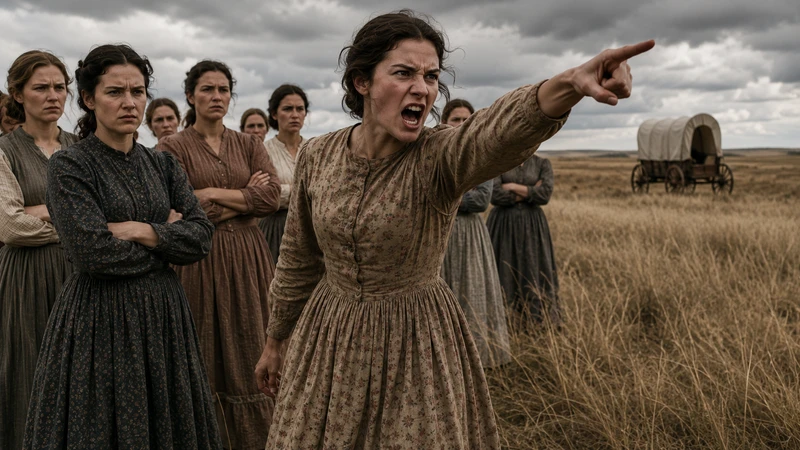
There is a certain kind of Hollywood writer who reads a beloved American story, decides it is a problem to be solved, and then spends millions of dollars solving it. Meet Rebecca Sonnenshine, showrunner of Netflix's new "Little House on the Prairie," who looked at Laura Ingalls Wilder's tale of a family carving a life out of the Kansas grass and concluded that what it really needed was less family, less carving, and a great deal more finger-wagging.
Sonnenshine has been admirably honest about her project, which is more than you can say for most people caught doing this sort of thing. She told an interviewer that pop culture portrays the West as men riding around with guns and solving problems with violence and posturing, and that this is just not how it worked. The team, she said, is really trying to do a show that does not fall back on tropes of masculinity. A frontier drama that has decided masculinity is a trope. That is a bit like a cooking show that has decided food is a trope, but here we are.
The results are about what you would expect. In the very first episode, Pa is scolded for dragging his family to Kansas, because it is supposedly a myth that men can make it out here alone. Where the books had the Ingalls family fight off a prairie fire by themselves, the town now fights it off together. One imagines the writers' room erupting in applause. Rugged individualism, the thing that actually settled the continent, has been quietly escorted offstage and replaced with a municipal committee.
Ma, meanwhile, gets the glow-up. She reportedly begins as a submissive wife and gradually comes into her own, at one point contemplating an offer from her sister to leave Pa in Kansas and take the girls back east, a threat she floats during a fight with him. Nothing says timeless family entertainment like Mom threatening to leave Dad in act two. The show even fretted that prairie bonnets were tradwife-coded and diversified the headwear accordingly. Somewhere, a producer billed a full day's work to the great bonnet question.
Then comes the land. An entire fifty-two-minute episode is built around the Osage negotiating with the federal government, during which Pa performs what amounts to a land acknowledgment and apologizes to his Osage friend for only being able to think of his own family. A man prioritizing his own wife and children is now the sin that requires the confession. The beloved Mr. Edwards, reimagined as an alcoholic and trauma-burdened figure, muses that maybe the land does not need to belong to any of us. A homesteading story that has grown skittish about, of all things, homesteads.
The tell is that Sonnenshine keeps announcing the agenda and then acting puzzled that anyone noticed. She says the word woke has been a victim of semantic drift and become a catch-all for things people do not like. She insists audiences are worried for no reason. This is a familiar move. You rewrite the marriage, relitigate the settlement, retire the masculinity, and then look wounded when the audience declines to pretend you did nothing at all. She has said, repeatedly and on the record, that the frontier's traditional values were the actual problem. The viewers simply took her at her word.
In fairness, the reboot is not the wall-to-wall hoax some critics claim, and honesty requires saying so. Slate asserted the show woke-ified the story by inventing a Black doctor, and that charge was simply wrong. The Black doctor, based on a real physician who lived near the Ingalls family in Independence, appears in Wilder's own books and nurses the family through malaria. The series pulls a respectable 80 percent on Rotten Tomatoes and generally favorable reviews. And original Laura, Melissa Gilbert, has argued the old show was hardly timid, noting it once tackled racism, addiction, nativism, antisemitism, and worse. Serious material is not the enemy. The old series handled hard things without treating its own heroes as a cautionary tale.
That is the difference the new writers seem to miss. Millions of children loved "Little House" precisely because it celebrated the grit, discipline, and love of a family who chose to build something out of nothing. You can wrestle honestly with the costs of westward expansion, which is fair game, without staging a season-long struggle session in which Pa apologizes for feeding his kids. Sonnenshine says the story is really all about the Osage. Maybe her version is. Wilder's was about a family, and a country, that believed the future was worth the work.
The good news is that the original is a click away, bonnets and masculinity intact. Some myths, it turns out, are worth keeping.
- Article Source:
The Post Millennial

- Photo:
