
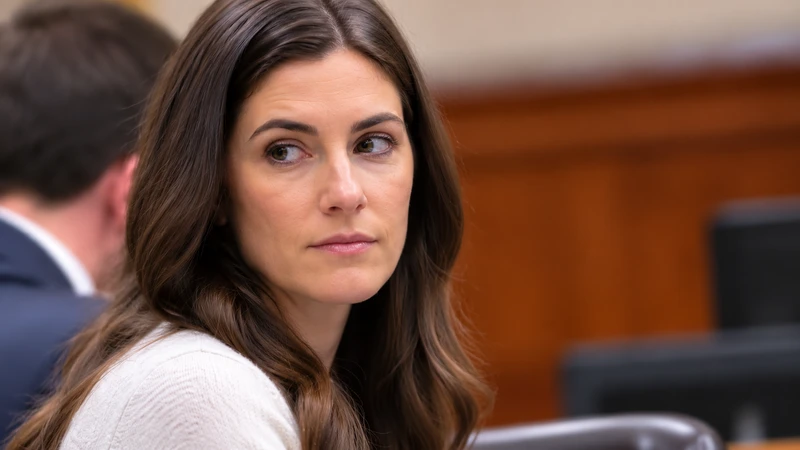
Closing arguments in the Lindsay Clancy trial are expected in Plymouth Superior Court today or tomorrow. Twenty days of testimony end this week, and then twelve people in Massachusetts take custody of a question the rest of the country has been arguing about for three years.
Cora was five. Dawson was three. Callan was eight months. They were strangled in their Duxbury home on January 24, 2023. Their mother does not dispute killing them.
That is the entire agreed portion of this case. Everything past it is contested, and the contest has gotten ugly.
Two verdicts, and nothing in between.
This is why the country cannot look away. There is no middle option on the verdict form. If the jury finds Clancy criminally responsible, she goes to prison for the rest of her life with no parole. If it finds her not criminally responsible, she goes to a state mental health facility.
Life without parole, or a hospital. Those are the choices. A jury cannot split the difference, cannot find her partly responsible, cannot craft something proportional to how complicated this feels. Twelve people have to pick one.
That binary is doing a great deal of the work in the public reaction, because most Americans watching this do not feel entirely one way.
The crowd outside tells you everything.
On Monday morning, people gathered outside the courthouse wearing white to remember three dead children. Supporters of Lindsay Clancy have gathered on other days wearing pink.
Same courthouse. Same case. Two vigils that cannot both be about the same thing.
That is the controversy in physical form, and it has been running online for three years. One side sees a woman failed by a medical system that handed her nine psychiatric prescriptions from multiple providers who were not coordinating, much of it over Zoom, while her family kept reporting she was deteriorating. The other side sees three murdered children and a defense that would not be offered nearly this much oxygen if the defendant were poorer, or male, or looked less like the woman next door.
Both of those observations contain something true. That is exactly why this case will not resolve quietly no matter what the jury says.
The experts canceled each other out.
The defense rested Friday with Dr. Phillip Resnick, one of the most recognizable forensic psychiatrists in the country and a figure in the Andrea Yates case, which is the comparison hanging over this entire trial. Resnick testified that Clancy described an external force taking over her body and told him she had no control.
The prosecution came back with Dr. Avram Mack and forensic psychologist Dr. Kirk Heilbrun. Heilbrun testified that Clancy had a fairly limited mental health history before all this. Mack testified she recalled telling her children to go to God as she killed them, which the defense reads as evidence of a woman in psychosis who believed she was delivering them to heaven, and which the prosecution reads very differently.
Defense attorney Kevin Reddington went after Mack's qualifications directly on cross, raising a prior case in which he said a judge had ruled Mack unqualified to testify. Mack rejected that characterization.
When the paid experts disagree this completely, jurors stop evaluating psychiatry and start evaluating people. Everyone in that courtroom knows it.
And then Monday happened.
Prosecutors asked Heilbrun about a conversation regarding Clancy's Catholic upbringing and the concept of mortal sin. Reddington moved for a mistrial and accused the prosecution of intentional misconduct, noting there had already been a warning on this subject.
Judge William Sullivan denied the mistrial. He also called the testimony problematic, struck it from the record, and instructed jurors not to consider it.
Anyone who has watched a trial knows what that instruction is worth. You cannot unring a bell in a room where twelve people just heard it. And if Clancy is convicted, that exchange is going straight into an appeal, which means this case may not actually end this week regardless of what the jury does.
What this is really about.
Strip away the personalities and the country is arguing about something older than this trial. Does a catastrophic mental break excuse what would otherwise be the worst crime a person can commit?
The law has already answered that, and it answered it centuries ago. Insanity is not a modern loophole invented by defense attorneys. It is ancient common law, built on the idea that punishment requires a mind capable of choosing. Conservatives who believe in moral agency should be the first to understand why: the same principle that makes people responsible for their choices is the principle that asks whether a choice was actually made.
The hard part is that recognizing the principle tells you nothing about this defendant. That is a factual question about one woman on one night, and it belongs to a jury that has sat through twenty days of evidence the rest of us have only read about.
So the country will watch closing arguments, and a verdict will come, and roughly half of America will be furious about it.
Three children are still dead either way. That part is not up for deliberation.
If you or someone you know is struggling, call or text 988 to reach the Suicide and Crisis Lifeline.
- Article Source:
news.basedapparel.com

- Photo:
