
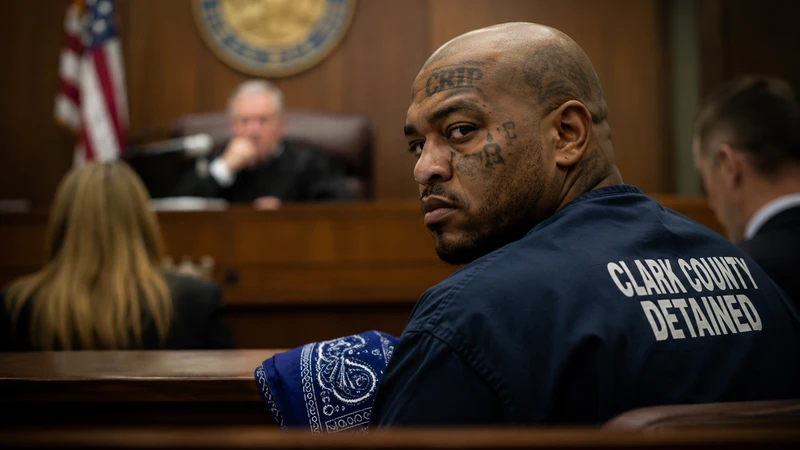
Closing arguments began this morning in a Las Vegas courtroom, roughly thirty years after Tupac Shakur was shot at a red light near the Strip and died six days later at twenty-five years old. Duane "Keffe D" Davis, 63, is the first and only person ever charged in the case. He has pleaded not guilty. Twelve jurors, ten women and six men, will decide.
Before anything else: Tupac's family has waited three decades for a courtroom. Whatever happens this week, they are the only people in this story who deserve the last word about it.
Now, the legal strategy, which is one for the textbooks.
The prosecution's star witness was the defendant's publisher.
Prosecutors called twenty-five witnesses over a week and a half. But the centerpiece of their case was not a cooperating informant or a surprise piece of forensic evidence. It was a book.
In February 2019, Davis published a memoir describing his role in the killing in considerable detail. The desire for retaliation. Obtaining a Glock. Looking for Shakur that night. The year before, he sat for an interview on BET's "Death Row Chronicles" and discussed where the shots came from. He talked about it publicly, on camera, for money, for years.
Four years after the book came out, he was indicted on a charge that tracks his own account remarkably closely.
The judge ruled that jurors may hear the book and the interviews. One legal analyst described his statements as gold-star evidence for the prosecution, which is a generous way of saying the state's case was substantially ghostwritten by the defendant.
Which leaves exactly one available defense.
His attorney's argument is that Davis fabricated and embellished the entire thing for money and notoriety.
Sit with the position that puts a man in. To walk out of that courtroom, the jury has to conclude that he spent years lying about murdering one of the most beloved artists in American history, on television and in print, for royalties.
That is not a character reference. That is the best-case scenario.
It is also, to be fair, not an unreasonable argument in a vacuum. People have absolutely confessed to famous crimes they did not commit, and the entertainment economy pays well for a good story. But it is a strange hill, and it belongs entirely to him, because he built it himself, chapter by chapter, and then sold it in hardcover.
The defense case took under two hours.
After the prosecution's week and a half, Davis called three witnesses, all former Las Vegas police officers, and rested before lunch. He did not take the stand himself, which is his constitutional right and also a decision his own memoir made considerably easier.
To their credit, his lawyers landed real points. A retired homicide detective testified he was unable to independently verify several details Davis gave police back in 2009. Another former officer testified he had been told to stand down on arresting Davis. And the defense's broader theme, that a thirty-year-old case has gone cold and that investigators leaned on a talker instead of building corroboration, is a legitimate reasonable-doubt argument that jurors are entitled to weigh.
That is genuinely how the system is supposed to work. The state has the burden. Stale evidence is a real problem. None of that requires anyone to like the defendant.
What happens now.
Judge Carli Kierny read the jury its instructions this morning. Both sides get their closings. Then twelve Clark County residents, among them a mailman and a self-improvement coach, go into a room to resolve one of the longest-running questions in American music.
If convicted of murder with a deadly weapon, Davis faces life.
Thirty years is a long time to wait for twelve strangers to decide anything. But there is a lesson sitting in the middle of this trial that has nothing to do with hip-hop, gangs, or Las Vegas, and it applies to roughly everyone with a podcast microphone and a story they think is too good to keep quiet.
The internet is forever. So, it turns out, is the paperback.
- Article Source:
Based Apparell

- Photo:
