
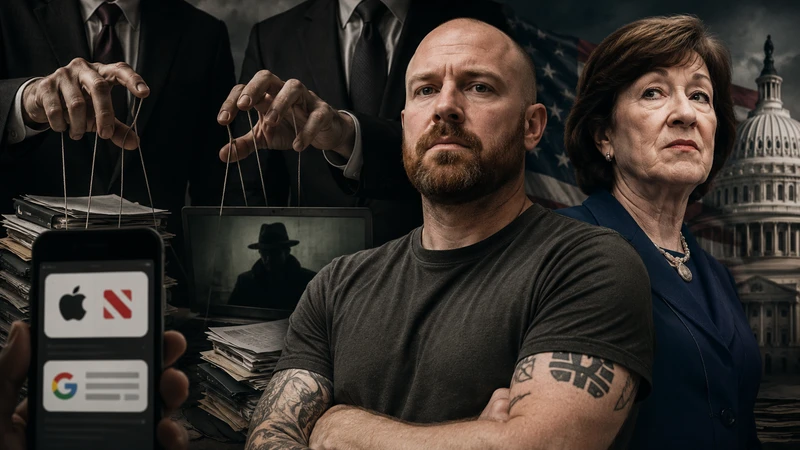
For six months, two of the most powerful gatekeepers in American media had a story they did not want you to see. Graham Platner, the Maine Democrat who briefly looked like the party's best shot at knocking off Republican Senator Susan Collins, was drowning in scandal. A Nazi tattoo. Ugly Reddit posts. A pile of damaging allegations that any honest newsroom would have chased hard. And yet, if you got your headlines from Apple News or Google News, you would have had almost no idea any of it existed.
That is the finding of a new study from the Media Research Center, and it deserves a lot more attention than the tech giants would like. The watchdog group examined coverage on Apple News and Google News from November 2025 through May 2026 and concluded that the two platforms surfaced virtually nothing about Platner's mounting troubles, even as other outlets reported on them. According to the MRC, the apps failed to promote at least 112 negative stories about Platner over that six month stretch.
Think about what that means in practice. These are not fringe apps. They sit on hundreds of millions of phones and act as the front page for a huge share of the country. For most people, what shows up in those feeds is the news. What does not show up may as well not have happened. And for half a year, the sins of a Democratic candidate simply did not happen, at least not according to the algorithms curating what voters in Maine and across the nation were allowed to see.
The blackout did not break because Apple and Google suddenly rediscovered their commitment to a free flow of information. It broke, the MRC found, only after The New York Times published a report on May 30 detailing a sexting controversy involving Platner. That story cracked the dam, broader scrutiny followed, and the candidacy that Big Tech had so carefully protected finally collapsed.
MRC President David Bozell put his finger on the timing, and the timing is the whole story. For months, while Platner looked like the one Democrat who could beat Collins, he said, the two most powerful news apps in America buried scandal after scandal. Then the polls turned, Platner became a liability, and the blackout ended. In other words, the shield stayed up exactly as long as it was useful to the Left, and came down the moment protecting him no longer served the cause.
Platner eventually withdrew from the race altogether after multiple women accused him of repeated sexual misconduct, physical abuse, and rape. Democratic leaders who had been happy to ride his momentum abandoned him in a hurry, and he announced he would pull his name from the ballot. The man was not a victim of a smear. He was a genuinely troubled candidate whose record voters had every right to weigh, and the gatekeepers spent months making sure they could not.
To be fair, Google flatly rejects the study. A company spokesperson called the methodology completely flawed and insisted that Google News updates continuously throughout the day and serves results based only on a user's interests and location, not on any thumb on the scale. That denial deserves to be on the record, and reasonable people can argue about how you measure something as slippery as algorithmic promotion. But the pattern the MRC describes fits a story conservatives have watched play out again and again, from the Hunter Biden laptop to a hundred smaller episodes, and the burden of proof ought to sit with the platforms that keep ending up on the same side.
That is the deeper problem here. When a handful of Silicon Valley companies control the pipes through which most Americans receive information, their editorial choices are not private business decisions. They are exercises of political power, whether the companies admit it or not. A curated feed that consistently protects one party and buries the other's opponents is not neutral plumbing. It is participation in the campaign.
Voters cannot make sound decisions on information they are never shown. The Platner episode is a reminder that the fight over free speech is no longer just about what platforms take down. It is about what they quietly decline to lift up. Conservatives who want fair elections should insist on transparency in how these algorithms rank the news, because a democracy where the gatekeepers pick the winners is not much of a democracy at all.
- Article Source:
The Post Millennial

- Photo:
